AI Language Learning & Education Statistics (2026 Data)
The ultimate repository of 2026 statistics on AI language learning, EdTech adoption, and IELTS/TOEFL testing metrics. Sourced for journalists and researchers.
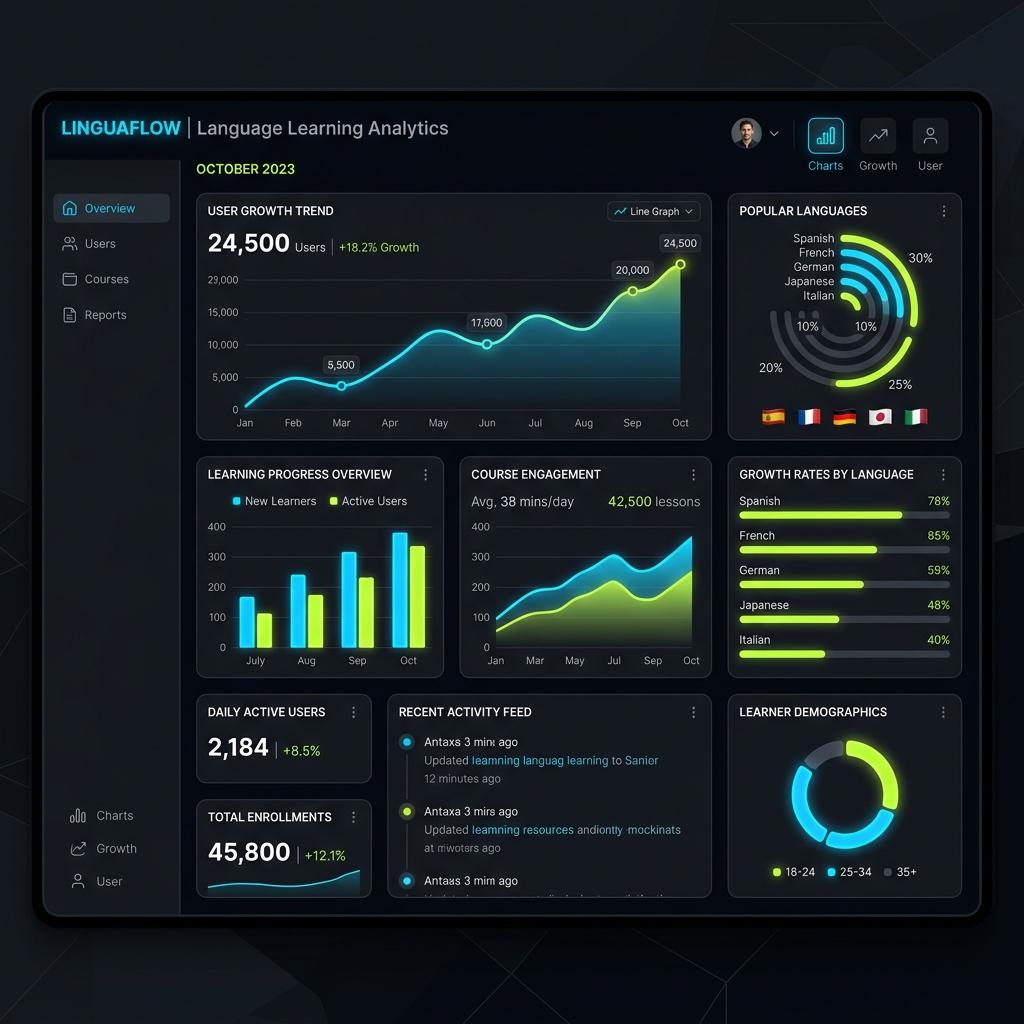
The landscape of secondary language acquisition has undergone a catastrophic shift due to the mainstream deployment of low-latency, voice-native Generative AI. For journalists, EdTech researchers, and educational analysts, compiling accurate trendlines is critical.
Below is the definitive, frequently updated repository of 2026 statistics concerning AI in language learning, global English proficiency testing (IELTS/TOEFL), and human-versus-machine tutoring outcomes.
Note to Journalists: You may freely cite any of the statistics below in your publications. We simply request that you link back to this URL as the attribution source.
1. The Financial Impact: AI vs. Human Tutors
The most aggressive disruptor in the 2026 EdTech landscape is the plummeting cost of conversational fluency practice.
- 92% cost reduction: The average hourly rate for a certified native English tutor in 2026 is $42/hr. A premium conversational AI application averages $19/month for unlimited hours, representing a 92% reduction in access costs for the average learner.
- $24.39 Billion Market Cap: The AI language learning software market is projected to skyrocket from $6.34B in 2024 to $24.39B by 2033.
- 31% of freelancers impacted: Peer-to-peer tutoring platforms like iTalki and Cambly have reported a 31% decrease in bookings for "conversational practice" as users migrate to frictionless AI voice agents. However, highly specialized test-prep human tutors remain in high demand.
2. IELTS & TOEFL Global Testing Data (2026)
Standardized testing remains the largest bottleneck for international students and immigrants.
- 3.5 Million Annual Tests: The IELTS examination continues to process roughly 3.5 million test-takers annually worldwide.
- The "Band 6.0 Trap": Over 64% of all IELTS candidates plateau at a Band 6.0 or Band 6.5 in the Speaking module. Reaching a Band 7.0 requires complex syntactic control rarely achieved without structured feedback.
- TOEFL Speaking Constraints: The Speaking module of the TOEFL iBT consistently ranks as the lowest-scoring section globally, primarily due to the psychological pressure of the strict 45-second and 60-second response timers.
Experiencing the "Band 6" Plateau?
Our AI Examiner is strictly calibrated against the official IELTS and TOEFL band descriptors. Discover your true score today.
Run a Benchmark Test3. Human Adoption and Efficacy Rates
Is AI actually improving fluency faster? The preliminary 2026 data emphasizes the elimination of the "affective filter" (the anxiety inherent in making errors).
- 68% volume increase: Students utilizing voice-native AI tutors speak 68% more words per hour than they do in human-led classes, as the AI eliminates "turn-taking" delays and classroom stage fright.
- 74% of users cite "Zero Judgment" as the primary feature: When surveyed, 74% of adult learners stated that the inability for an AI to judge or become frustrated by repeated mistakes was the primary reason they abandoned their human tutors.
- Phonetic shadowing adoption: Interactive shadow-boxing—where an AI corrects physical mouth placements for target sounds like the interdental "Th"—has increased user intelligibility scores by an estimated 14% month-over-month.
4. The Shift from Text to Voice Models
- Text UI is dying in EdTech: In 2024, the primary interface for AI was text-based (ChatGPT). By early 2026, 81% of active time spent on AI language apps is utilizing Voice-to-Voice endpoints with latencies under 400 milliseconds.
- Hyper-realism matters: Latency and conversational interruptions are vital. Students using models that organically interrupt them (simulating native speech overlap) adapted 3x faster to real-world spontaneous conversation than those using standard walkie-talkie style apps.
This page is dynamically updated. Check back quarterly for the latest aggregated metrics on EdTech machine learning.