IELTS Speaking Part 3 Questions and Answers (2026) + Method
IELTS Speaking Part 3 questions by theme with model answers, the six question types, and a four-step method for developed Band 7+ answers.
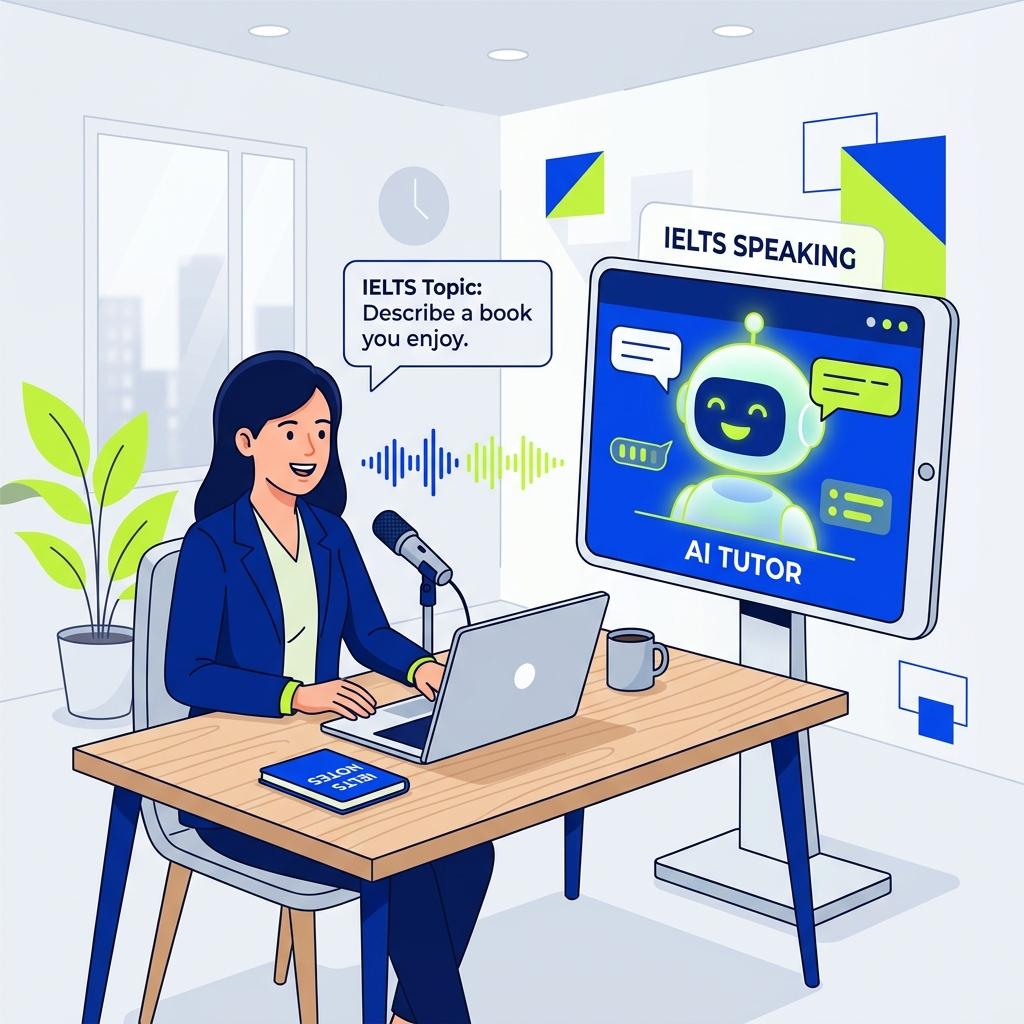
IELTS Speaking Part 3 is the discussion. For four to five minutes, the examiner moves away from your personal experience and asks you to explain, compare, evaluate and speculate about wider issues linked to your Part 2 topic. Many candidates find Part 1 and Part 2 manageable and then stall here, because short, personal answers that worked earlier no longer show what the examiner is listening for.
This page covers how Part 3 works, a four-step method for developed answers, the six question types you will meet, and Part 3 questions by theme with model answers.
How Part 3 works
From the official IELTS test format, Part 3 lasts 4–5 minutes. You and the examiner "discuss issues related to the topic in Part 2 in a more general and abstract way and, where appropriate, in greater depth". It tests "your ability to explain your opinions and to analyse, discuss and speculate about issues".
So if your Part 2 card was "Describe a useful app you use", Part 3 might ask whether technology makes people less patient, how communication has changed in your country, or what problems more automation could cause.
Part 3 is marked on the same four criteria as the rest of the test, but it gives you the most room to show the higher-band features: developed reasoning (Fluency and Coherence), topic-specific and abstract vocabulary (Lexical Resource), and complex structures like conditionals and concessions (Grammatical Range and Accuracy). See the band descriptors explained.
The four-step method: answer, reason, example, qualify
A one-sentence opinion is not a Part 3 answer. Aim for roughly three to five sentences that follow this shape:
- Answer. Give a direct position in the first sentence. "I'd say technology has made people less patient, at least in some ways."
- Reason. Explain why. "Because we're used to getting information instantly, waiting even a few seconds starts to feel frustrating."
- Example. Make it concrete. Use a general example, not your life story. "You can see it in how quickly people abandon a website if it loads slowly."
- Qualify. Add a contrast, condition or exception. "That said, I don't think it applies to everything. People still queue for hours for a concert they really care about."
Step 4 is what most Band 6 answers are missing. A qualification shows you can see more than one side, and it naturally brings out complex grammar: while, although, unless, it depends on, that said.
The six Part 3 question types (and frames for each)
| Question type | Example question | Useful frames |
|---|---|---|
| Opinion | Do you think children should learn to code at school? | I'd argue that… / I'm in two minds about this… |
| Compare past and present | How have shopping habits changed in your country? | Compared with a generation ago… / These days, whereas in the past… |
| Predict the future | Will people still read printed books in the future? | I suspect that… / It's likely that…, although… |
| Cause and effect | Why do young people move to big cities? | The main driver is probably… / This leads to… |
| Evaluate a solution | What can governments do to reduce traffic? | One option would be…, but the drawback is… / The most effective approach is probably… |
| Hypothetical | What would happen if everyone worked from home? | If that happened, I think… / It would probably mean…, unless… |
You don't need a fixed template for each. You need to recognise the type quickly so that your first sentence answers that question.
When you don't know anything about the topic
It happens: "Should space tourism be regulated?" Silence hurts your Fluency and Coherence score far more than an honest admission does. Acknowledge it briefly, then reason it through:
"That's not something I've thought much about, to be honest, but if I had to guess, I'd say yes, mainly for safety reasons…"
You are being assessed on your language, not your expertise. A thoughtful guess, explained clearly, is a strong answer.
IELTS Speaking Part 3 questions by theme, with model answers
These model answers were written by our editorial team to show the features of developed, higher-band answers. They are not certified band scores, because bands are awarded for spoken performance. Study the structure, then answer each question out loud in your own words.
Technology and communication
- How has technology changed the way people communicate?
- Do people rely too much on their phones?
- Should there be limits on how much time children spend online?
- Will AI change the kind of jobs people do?
Q: How has technology changed the way people communicate?
"I'd say the biggest change is that communication has become constant but shallower. Because messaging is free and instant, people stay in touch with far more people than they used to, which is genuinely positive for families spread across different countries, like mine. On the other hand, a lot of that contact is quick reactions rather than real conversations. So I think technology has made it easier to stay connected, but whether we stay close is still up to us."
Work and careers
- Why do some people change jobs frequently?
- Is a high salary more important than job satisfaction?
- How will working patterns change in the future?
- Should companies allow employees to work from home?
Q: Is a high salary more important than job satisfaction?
"It really depends on someone's circumstances. For a young person supporting a family, a higher salary might simply be more important, because job satisfaction doesn't pay the rent. But once people have a reasonable income, I think satisfaction matters more, since you spend most of your waking hours at work, and a job you dread can wear you down however well it pays. So I'd say salary matters most up to a point, and satisfaction after that."
Education and learning
- Should schools focus more on practical skills?
- Is it better to learn online or in a classroom?
- Why do adults choose to learn new skills?
- What makes a good teacher?
Q: Is it better to learn online or in a classroom?
"I don't think one is better across the board. It depends on what you're learning and who you are. Online learning is clearly more flexible, which suits working adults who can't attend classes at fixed times. But for younger students, or for subjects that need hands-on practice, a classroom has a big advantage, because a teacher can see immediately when someone is lost. If I had to choose, I'd say the most effective model is probably a mix of the two."
Environment
- Who is more responsible for protecting the environment: individuals or governments?
- Why do people still use plastic even though they know it's harmful?
- Will cities become greener in the future?
- Should flying be more expensive to reduce pollution?
Q: Who is more responsible for protecting the environment: individuals or governments?
"Both have a role, but I'd argue governments carry more responsibility, because they can change systems rather than just habits. For example, an individual can choose to recycle, but a government can decide whether recycling facilities exist at all, or whether public transport is good enough that people don't need cars. That said, government policy usually follows public pressure, so individual choices still matter, partly because they show politicians what voters care about."
Society and community
- Do people know their neighbours less than in the past?
- Why do young people move to big cities?
- How can communities support elderly people?
- Is it important to do volunteer work?
Q: Why do young people move to big cities?
"The main driver is probably opportunity. Most of the better-paid jobs and universities are concentrated in large cities, so moving there can feel like the only way to get ahead. There's also a social side: cities offer more variety and independence, which appeals to people in their twenties. The downside is that rural areas can be left with an ageing population and fewer services, which then gives the next generation even more reason to leave. It's a bit of a cycle, unless smaller towns can create good jobs locally."
Culture and tradition
- Is globalisation good or bad for local cultures?
- Should countries protect their traditional customs?
- How does travel change people's attitudes?
- Is it important to preserve old buildings?
Q: Should countries protect their traditional customs?
"Generally, yes, but I'd distinguish between protecting traditions and freezing them. Traditions like festivals, crafts or local languages give people a sense of identity, and once they disappear they're very hard to bring back, so there's a good case for supporting them through education or funding. However, traditions have always changed over time, and some customs, particularly ones that exclude certain groups, probably should change. So I'd say countries should protect what gives people meaning, while letting the rest evolve."
More Part 3 themes recur across test cycles: health, money and consumption, media and advertising, transport, family, art, tourism and crime. You'll find questions on these in the IELTS Speaking questions and topics bank.
Common Part 3 mistakes
- Answering about yourself only. "I don't use social media much" doesn't answer "How does social media affect society?" Start general, and use yourself only as one example.
- One-sentence answers. Short answers don't give the examiner enough language to award a higher band.
- Not answering the question type. If the question asks you to compare past and present, your first sentence should compare.
- Memorised "advanced" phrases. Over-formal openers like "It is an undeniable fact that…" sound rehearsed. Natural linking is better.
- Panicking at unfamiliar topics. Reason it through out loud. That is the skill being tested.
How to practise Part 3
- Pair every Part 2 card with Part 3 questions. After a Part 2 cue card, answer three abstract questions on the same theme.
- Use the four-step method deliberately for a week until it becomes automatic: answer, reason, example, qualify.
- Record and check one thing at a time: first development, then vocabulary range, then complex structures.
- Practise with follow-ups you can't predict. Real Part 3 is a conversation. The examiner may push back or ask "why?" A partner or a conversational AI tutor helps here more than a fixed list.
FAQ
How long is IELTS Speaking Part 3? Four to five minutes.
Is Part 3 connected to Part 2? Yes. The examiner discusses issues related to your Part 2 topic in a more general and abstract way.
How long should my Part 3 answers be? There is no official length, but developed answers of around three to five sentences usually give the examiner enough to assess. The examiner may interrupt to move on, which is normal.
Can I disagree with the question? Yes. Disagreeing politely and explaining why is a natural way to show reasoning and range.
What if I don't understand the question? You can ask the examiner to repeat or rephrase it. That's better than answering a different question.
Practise Part 3 with a live AI tutor
Sprechify's 30-day IELTS Speaking course spends a full week on Part 3: opinion phrasing, reasons and examples, comparing, hypotheticals, counter-arguments, and abstract themes like technology, the environment and culture. The live voice tutor asks follow-ups as a conversation and gives feedback on all four Band Descriptors. See how it works.
Related reading: IELTS Speaking Part 1 questions and answers · How to get Band 9 in IELTS Speaking · IELTS Speaking Band 6 to 7