IELTS Pronunciation for Chinese Speakers: Key Fixes
IELTS pronunciation for Chinese speakers: final consonants, clusters, th and v sounds, l/n, word stress and rhythm, with practical drills.
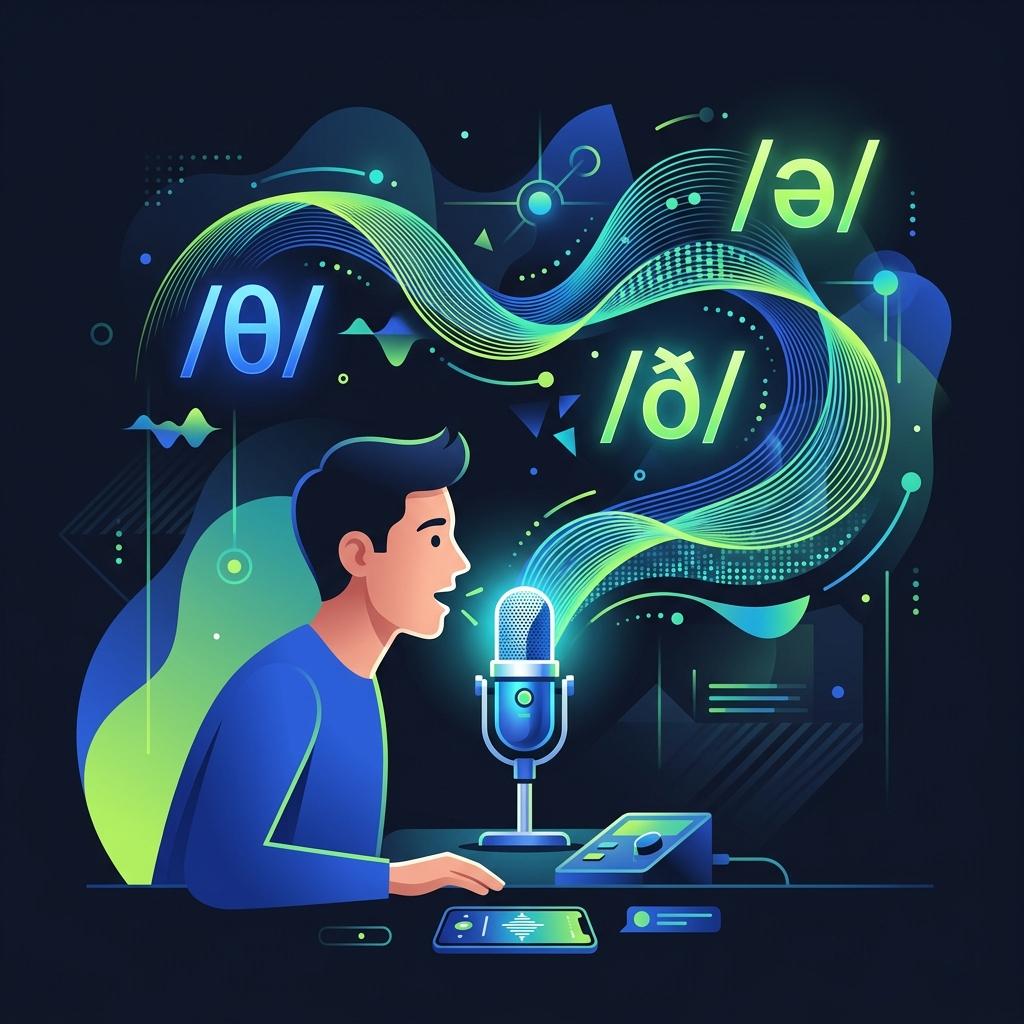
IELTS doesn't mark accent. It marks how easily you're understood and how well you use English pronunciation features. The public Band Descriptors describe a Band 8 speaker as "easy to understand throughout", with their first-language accent having "minimal effect on intelligibility". So the goal for Chinese speakers isn't to sound British or American. It's to remove the few features that make a listener work harder.
This guide covers the features that most often affect clarity for speakers of Mandarin and other Chinese languages, and how to practise them.
Chinese speakers come from many language backgrounds (Mandarin, Cantonese, Wu, Min and others), and features vary. Not everyone has all of these. Use this as a checklist.
Why the differences happen
In Mandarin, syllables can only end in a vowel or in -n or -ng. English words can end in almost any consonant, and in clusters (texts, months, asked). Mandarin is also tonal and gives syllables fairly even timing. English uses stress and reduced syllables to show which words matter. Most features below come from these differences.
Features worth working on (most impact first)
1. Final consonants: dropped or followed by an extra vowel
Two opposite habits are common:
- Dropping the final sound: good → "goo", bike → "bai"
- Adding a vowel after it: good → "good-uh", big → "big-uh"
Both make words harder to recognise and break the rhythm.
Drill: hold the final sound without releasing a vowel. Say "goo-d", close your mouth, and stop. Practise pairs: bed / bet / bad, rob / rope / road.
2. Grammar endings: -s and -ed
When final sounds weaken, grammar endings disappear: he like, three cat, I finish yesterday. The examiner may hear these as grammar errors, which can affect your Grammatical Range and Accuracy score too.
Drill: retell yesterday out loud, exaggerating every -ed: walked /t/, played /d/, wanted /ɪd/. Then describe a friend's habits, exaggerating every -s.
3. Consonant clusters
Clusters are often broken with an extra vowel: street → "si-treet", class → "ke-lass", spring → "si-pring".
Drill: build the cluster slowly. Hold "sss", add "t", then "reet": s-t-reet. Speed up while keeping out the extra vowel.
4. "th", "v" and "w"
- /θ/ (think, three) often becomes s or f: three → "sree" or "free". Put the tip of your tongue lightly between your teeth and blow.
- /ð/ (this, mother) often becomes z or d. Same tongue position, add voice.
- /v/ (very, never) often becomes w: very → "wery". Top teeth touch the bottom lip for /v/; lips round for /w/.
5. /l/ and /n/
Some speakers, especially from parts of southern and western China, mix up these sounds: night / light, no / low.
Drill: for /n/, air goes through your nose (hold your nose and the sound stops). For /l/, air goes around the sides of your tongue. Practise night/light, knee/lee, snow/slow.
6. Word stress and rhythm
Even syllable timing can make longer words hard to recognise and hide the important words in a sentence:
- phoTOgraphy · eCOnomy · deVElopment · uniVERsity · opporTUnity
Drill: clap the stressed syllable. Then read a sentence with key words strong and small words light: "I THINK it's MORE imPORtant for CHILdren to PLAY outSIDE."
7. Vowel length and a few vowel pairs
ship / sheep, full / fool, bed / bad: short and long vowels, and /e/ vs /æ/, can merge.
A 15-minute daily routine
- 3 minutes: final consonants, with no extra vowels.
- 3 minutes: th, v/w and l/n minimal pairs. Choose the ones you find hardest.
- 5 minutes: one Part 2 cue card out loud, focusing on endings and stressing key words.
- 4 minutes: listen back and repeat only the sentences where a word was unclear.
FAQ
Will a Chinese accent lower my IELTS Speaking score? No. IELTS assesses intelligibility and how well you use pronunciation features, not accent.
What should Chinese speakers fix first? Usually final consonants and grammar endings. They affect clarity and how your grammar is heard. Then word stress on longer words.
Is intonation important? Yes. Using pitch to highlight key words and to show the end of a point is one of the pronunciation features the descriptors reward. It doesn't need to sound native, just meaningful.
Practise with a live tutor
Sprechify is a live voice AI tutor built only for IELTS Speaking. It corrects pronunciation inside real Part 1–3 conversations, one fix at a time, with a pronunciation week for sounds, stress and intonation focused on clarity, never accent. See the 30-day course. Also see IELTS Speaking practice in China.
Further reading: Learner English (Swan & Smith, Cambridge University Press) describes pronunciation features of speakers of many first languages.
Related reading: Does accent affect your IELTS Speaking score? · IELTS Speaking grammar · How to improve IELTS Speaking fluency