Does Accent Affect Your IELTS Speaking Score? What Examiners Actually Mark
Does your accent lower your IELTS Speaking score? No, but pronunciation does. What the descriptors say about accent, native speakers, British vs American English, and how to improve pronunciation for band 7+.
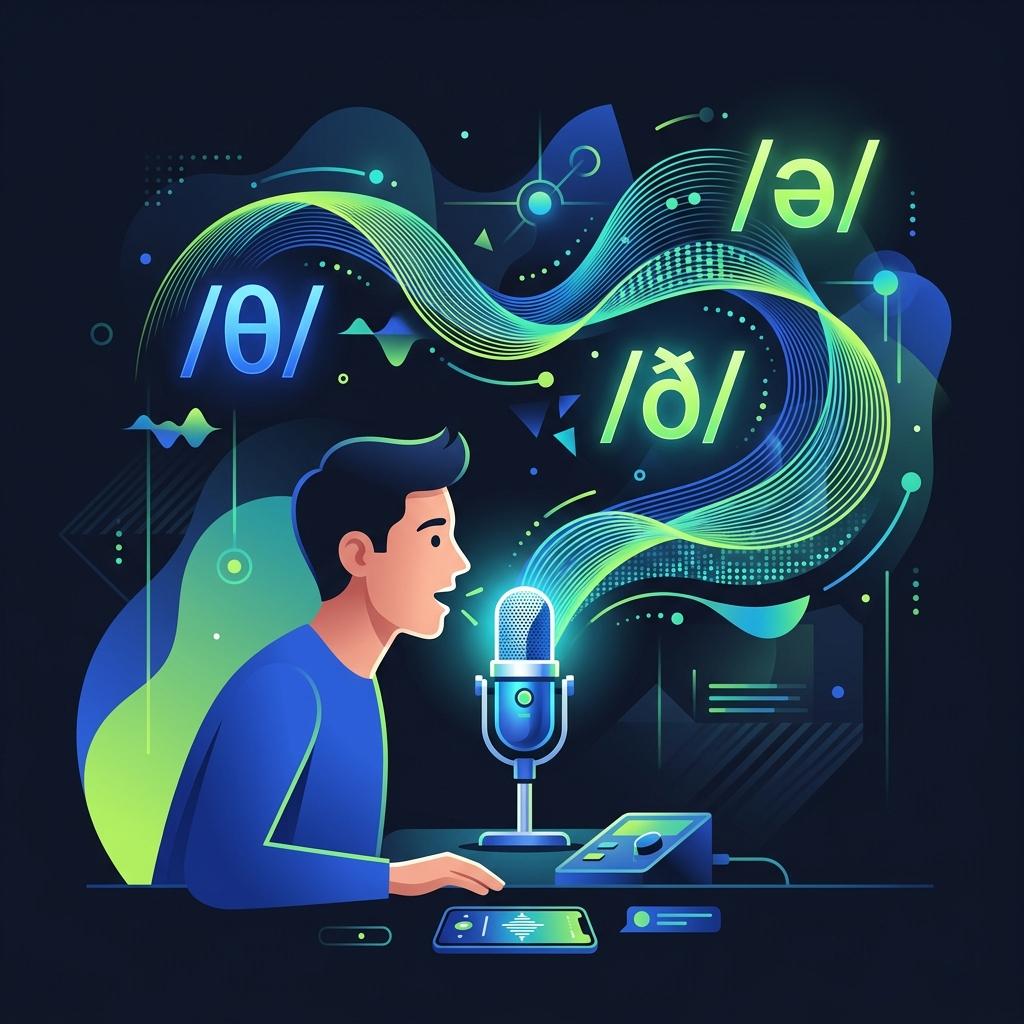
It's one of the most common worries in IELTS Speaking: "My accent is strong. Will I lose marks?" The short answer is no, your accent is not marked. What is marked is pronunciation: how easy you are to understand. This guide explains the difference, what the examiner listens for, and how to improve the parts that actually count.
The short answer: accent vs pronunciation
IELTS speaking pronunciation is one of four equally weighted criteria. The other three are fluency and coherence, lexical resource, and grammatical range and accuracy. That's why the IELTS criteria are described as grammar, vocabulary and pronunciation plus fluency.
The pronunciation criterion measures intelligibility: how much effort the listener needs to understand you. It does not measure how close you sound to any particular accent.
The public descriptors make this explicit. At band 8, your accent "has minimal effect on intelligibility". At band 9, it "has no effect on intelligibility". Nowhere do they say "sounds British" or "sounds native". You can read the IELTS speaking criteria British Council publishes, or the IELTS speaking band descriptors British Council and IDP share. Both say the same thing: clarity, not accent.
| Is it marked? | Accent | Pronunciation |
|---|---|---|
| Where you're from | No | – |
| Sounding British/American | No | – |
| Individual sounds clear enough to understand | – | Yes |
| Word and sentence stress | – | Yes |
| Intonation and rhythm | – | Yes |
| Connected speech | – | Yes |
Full details are in IELTS speaking band descriptors explained.
5 accent myths in IELTS Speaking
1. Having a native-like accent is required
This is myth 1. having a native-like accent is required, and it's false. The descriptors don't mention native speakers at all when it comes to accent. Native speakers meaning, in this context, is irrelevant: many native English speakers have strong regional accents and would still score well for clarity.
2. British English scores higher than American English
It doesn't. Received pronunciation (RP) (the received pronunciation accent, sometimes called the received pronunciation British accent) is not the target. Received pronunciation meaning: a prestige accent traditionally associated with southern England. Received pronunciation examples include how BBC newsreaders traditionally spoke. Received pronunciation English is used in some textbooks, but examiners don't expect it.
American English is equally acceptable. So is Australian, Indian, Nigerian or any other variety, as long as you're clear. Just be consistent: switching between "tomayto" and "tomahto" mid-answer isn't penalised, but it can sound unsettled.
3. Examiners can't understand my accent
IELTS examiners are trained to assess candidates from all over the world. They're used to a wide range of English accents. What makes speech hard to follow isn't accent itself, but specific pronunciation features: unclear sounds, wrong word stress, or flat intonation.
4. I should hide my accent
Trying to imitate an accent you don't have usually hurts. It makes your speech less natural, less fluent, and sometimes less clear. Is accent bad for you? Only when it gets in the way of being understood.
5. My accent is getting worse under pressure
People ask "why is my accent getting worse?" when they're nervous. What's actually happening is stress: under pressure, you speak faster and your mouth muscles tense, so sounds get less precise. The fix is to slow down and breathe, not to change your accent. See IELTS speaking anxiety.
What the examiner actually listens for: pronunciation features
These are the IELTS speaking pronunciation features, the pronunciation features in the descriptors:
Individual sounds. Can the examiner tell ship from sheep, vest from west? A few sounds matter most for intelligibility.
Word stress. PHOtograph, phoTOgraphy, photoGRAPHic. Wrong stress can make a word unrecognisable even when every sound is right.
Sentence stress and rhythm. English stresses key words and reduces the others: "I went to the shop to buy some bread." Stressing every word equally sounds robotic.
Intonation. Rising and falling pitch signals questions, lists, contrast and certainty.
Connected speech. Connected speech English, meaning linking ("an‿apple"), weak forms ("fish 'n' chips") and elision, makes speech sound natural. It's a big part of how to sound natural in English and how to sound more natural in English.
Common sounds that affect clarity
Some English sounds cause more problems than others. Here are the ones that most affect clarity.
The TH sound
The th sound English has two versions: voiceless /θ/ (think) and voiced /ð/ (this). What sound does th make in English? Put your tongue lightly between your teeth and blow air. Common th sound English words are think, three, both, this, that, mother.
Th sound English pronunciation is often replaced with /t/, /d/, /s/ or /f/. That's usually fine for intelligibility in context, but "tree" for "three" can confuse. The th sound American English and the th sound pronunciation British versions are the same, so you don't need to choose.
The R sound
R sound English varies by accent. R sound American English is pronounced after vowels (car, hard). R sound British English (RP) drops it after vowels. What sound does r make in English? A curled or bunched tongue that doesn't touch the roof of the mouth, unlike a trilled or tapped R. How to pronounce r sound in English: pull your tongue back slightly and round your lips a little. R sound in English pronunciation matters less for IELTS than you think, as long as words stay recognisable.
Commonly mispronounced words
- Correct pronunciation of enough: /ɪˈnʌf/ ("ih-NUFF"), not "e-nog".
- comfortable: /ˈkʌmftəbl/ (three syllables, "KUMF-tuh-bl")
- vegetable: /ˈvedʒtəbl/ (three syllables)
- determine: /dɪˈtɜːmɪn/ (not "deter-mine")
There are also common pronunciation mistakes in Indian English, such as v/w confusion and syllable-timed rhythm, and similar patterns for every first language. More in common IELTS speaking mistakes.
A note on regional accents: Estuary English accent (the estuary English pronunciation common around London) and northern accents are completely valid. People sometimes find a northern English accent hard to understand at first, and northern English accent words like "nowt" confuse learners, but that says nothing about IELTS scores. Similarly, videos of funny words in English accent comparisons are fun, but they're about variety, not correctness. If you want to know how to understand a British accent better for listening, exposure helps. For speaking, stick with the accent you have and make it clear.
Should I learn a British or American accent for IELTS?
Many candidates search "how to speak British accent", "how to learn British accent quickly", "how to learn British accent English", "how to learn American accent fast", "how to learn American accent quickly" or "how to learn American accent English". For IELTS, you don't need to. The best way to learn an American accent, or a British one, is years of immersion. It isn't a realistic exam strategy, and it isn't what's scored.
What is accent training, then, and is it useful? What is accent reduction training? Accent training teaches you to sound more like a target accent. Accent reduction aims to reduce features that affect clarity. For IELTS, clarity-focused pronunciation work is what helps. Full accent change isn't needed. When people ask what is the best accent reduction app, the better question is "which app improves my clarity?"
The importance of pronunciation in English
The importance of pronunciation in English is simple: if people can't understand you, nothing else matters. The importance of pronunciation in English communication shows up at work, in interviews and in daily life, not just in IELTS. That's also the importance of pronunciation in language learning: it's the channel all your grammar and vocabulary travel through.
Good enough pronunciation for band 7 means you're easy to understand throughout, with occasional lapses. IELTS speaking band 9 perfect pronunciation doesn't mean perfect RP. It means effortless intelligibility and full control of stress and intonation. IELTS speaking perfect pronunciation and fluency go together: clear sounds delivered smoothly.
How to improve your English accent (for clarity)
If you want to know how to improve your English accent for IELTS, focus on clarity. Here are pronunciation improvement tips, pronunciation improvement techniques and tips for good pronunciation in English that work:
- Record yourself and listen for words you'd have trouble understanding if someone else said them.
- Fix word stress first. It has the biggest effect on intelligibility.
- Slow down slightly. Most clarity problems come from speed.
- Shadow a clear speaker. Shadowing native speakers meaning: repeat along with a recording, matching rhythm and intonation. Shadowing American accent like native speakers is popular, but any clear model works.
- Learn sounds in words you use, not in isolation.
- Use films and series. The best movies to improve English pronunciation are ones you enjoy watching with subtitles on.
- Interact with native speakers, and with fluent non-native speakers too. Real conversation shows you which words cause confusion.
These pronunciation improvement exercises are the core of any pronunciation practice. For IELTS speaking pronunciation practice, practise them inside IELTS-style answers, not just isolated words. How to pronounce sound in English correctly is easier to learn with feedback than alone.
Find the 5 sounds that make you harder to understand.
Sprechify's pronunciation coaching checks all 44 English phonemes, flags only what affects clarity (never your accent), and has you retry until it's right.
See pronunciation coachingEnglish pronunciation tests and apps
A quick English pronunciation test can show where you stand. Options range from an English pronunciation test online free, an English pronunciation test free or a pronunciation test free tool, to an English pronunciation test AI that scores individual sounds. Some tools advertise an English pronunciation test accent check. For IELTS, choose one that scores intelligibility, not accent similarity.
A simple pronunciation test English learners can do at home: read a list of pronunciation test words (think, three, comfortable, vegetable, develop, determine, world, rural) into your phone, then play it back. Does each word sound clear? A pronunciation tester or pronunciation test online free tool can do the same automatically.
For apps, an English pronunciation app helps with daily practice. Popular options include:
- An English pronunciation app free tier, or an English words pronunciation app / word pronunciation audio app to hear correct models.
- An American English pronunciation app or a British pronunciation AI app if you want a specific model.
- An English pronunciation app AI or English pronunciation accent AI app that gives feedback on your own voice.
The more advanced pronunciation improvement app and pronunciation improvement AI tools (and pronunciation improvement online courses) give sound-by-sound feedback. Pronunciation improvement AI works best when it corrects you inside real speaking, not only in isolated drills.
Sprechify does this. Its AI examiner listens to your full IELTS answers. It flags the specific sounds and stress patterns that reduce clarity, and never penalises you for sounding like where you're from. It's trained on speakers from many language backgrounds, and pushes back only where the IELTS rubric would. As we'd recommend pronunciation in English be taught: clarity first, accent never.
Free official practice
The IELTS partners offer free practice. British Council free IELTS speaking practice tests and the IELTS practice test British Council materials show the format and sample questions. The IELTS speaking tips British Council publishes also stress clarity over accent. Use them alongside a tool that gives feedback on your pronunciation, such as Sprechify's free band estimator, which needs no account.
FAQ
Will a strong accent lower my IELTS speaking score? Not by itself. Only when specific pronunciation features make you hard to understand.
Do I need to speak like a native speaker for band 8 or 9? No. A native speaker accent isn't a criterion. Band 8 and 9 require clarity and full control of pronunciation features.
Is British English better for IELTS? No. IELTS accepts all standard varieties of English.
How long does it take to improve pronunciation? Word stress and a few key sounds can improve noticeably in 3–4 weeks of daily practice. Deeper rhythm and intonation take longer.
Can the examiner mark me down for switching accents? Not for switching, but inconsistency can affect how natural and clear you sound. Stick to your natural accent.
Next steps: read how to get band 9 in IELTS speaking, try pronunciation coaching, or see plans. Every paid plan has a 30-day money-back guarantee.