IELTS One Skill Retake for Speaking: Rules & 4-Week Plan
Missed your band in Speaking only? How IELTS One Skill Retake works, when it lifts your overall band, and a 4-week plan for the 60-day window.
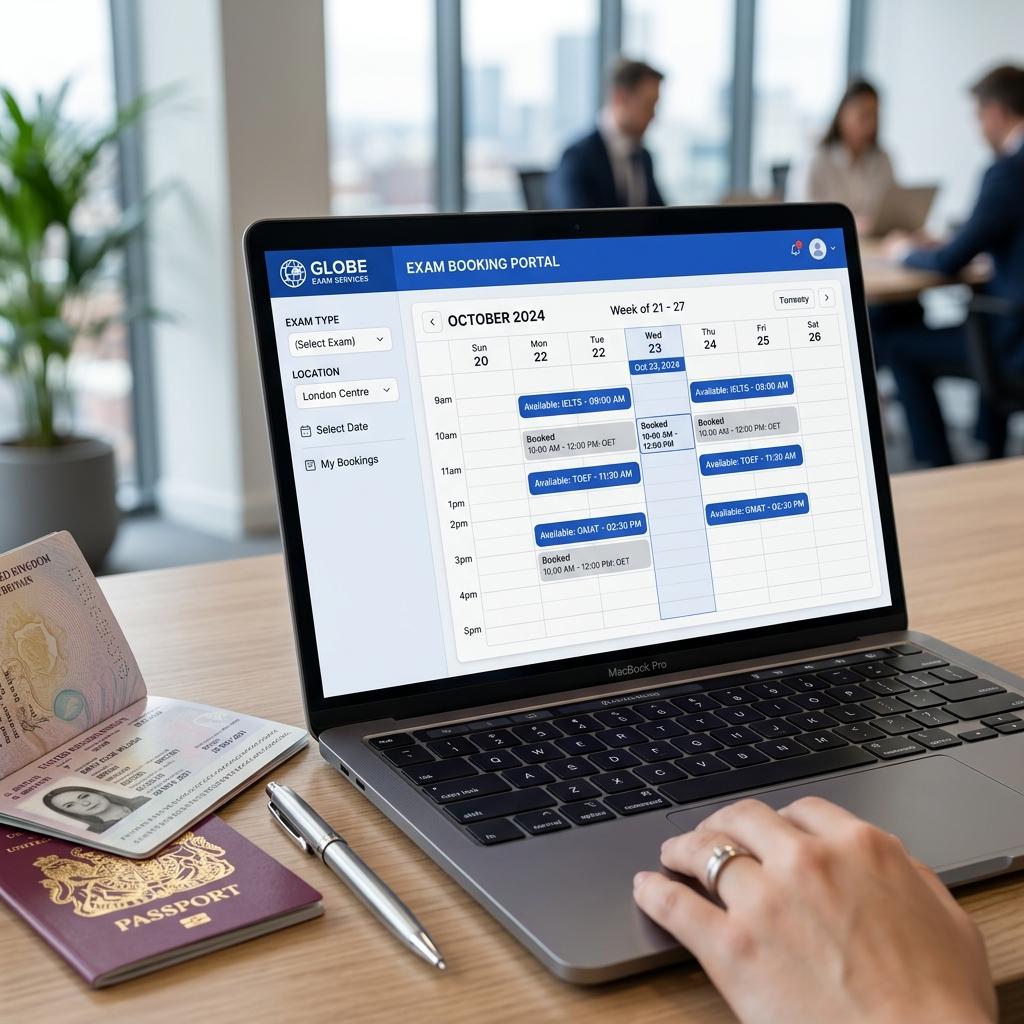
You got your results and three of the four scores are fine. Speaking is the one that missed. Before IELTS One Skill Retake, that meant sitting the whole test again. Now you can retake just Speaking. This guide covers the official rules, how to work out whether a retake will actually lift your overall band, and a four-week plan that fits inside the 60-day window.
What IELTS One Skill Retake is (the official rules)
IELTS One Skill Retake lets you re-sit one of the four skills (Listening, Reading, Writing or Speaking) without repeating the other three. The rules below are from the official IELTS website, checked on 2 October 2026:
| Rule | What it means for you |
|---|---|
| Your original test must be IELTS on computer | If you sat the paper-based test, you cannot use One Skill Retake for it. |
| Within 60 days of your original test | The retake must be taken within 60 days of your full test, so book early. |
| Once per original test | One retake, of one skill, per full test. |
| Academic and General Training | Both are eligible. UKVI accepts it for Academic and General Training on computer in selected locations. |
| Same format, timing and marking | A Speaking retake is the full Speaking test: Parts 1, 2 and 3, 11–14 minutes, face to face with an examiner, recorded. |
| You get a new Test Report Form | It shows your retake Speaking score with your original Listening, Reading and Writing scores, and the overall band is recalculated. |
| You can use either report | You can use your original TRF or the new one. |
| Check acceptance first | Organisations have to tell IELTS that they accept One Skill Retake results. Ask yours before you book. Canada does not accept it for Express Entry (see below). |
| Price varies | Fees are set locally. Ask your test centre. |
Applying to Canada through Express Entry? Immigration, Refugees and Citizenship Canada states: "We don't accept IELTS One Skill Retake for Express Entry." You need a full IELTS General Training test, CELPIP-General or PTE Core. If Canada is your goal, compare the options in IELTS vs CELPIP Speaking.
Because you can still use your original report, a retake carries little downside on paper. The real costs are the fee, two months of your time, and the risk that the organisation you need does not accept retake results.
Will retaking Speaking raise your overall band? Do the maths first
Your overall band is the average of the four skills, rounded. Officially, an average ending in .25 rounds up to the next half band, and one ending in .75 rounds up to the next whole band. Anything below those points rounds down. Example:
| Listening | Reading | Writing | Speaking | Average | Overall | |
|---|---|---|---|---|---|---|
| Original test | 7.0 | 7.0 | 6.5 | 6.0 | 6.625 | 6.5 |
| After a Speaking retake at 7.0 | 7.0 | 7.0 | 6.5 | 7.0 | 6.875 | 7.0 |
| After a Speaking retake at 6.5 | 7.0 | 7.0 | 6.5 | 6.5 | 6.75 | 7.0 |
In this example, even a half-band gain in Speaking moves the overall from 6.5 to 7.0. That is not always true, so check your own numbers. Two more things to check:
- Minimum per-skill scores. Many visas, universities and professional bodies set a minimum for each skill (for example "7.0 overall, no band below 6.5"). If Speaking is the only skill below the minimum, a Speaking retake is often the fastest fix, even if your overall band is already high enough.
- How far you are from the target. Half a band in Speaking within 60 days is realistic for many candidates who practise properly. A full band or more is a much bigger ask. If you need Speaking to go from 5.5 to 7.0, plan on more time.
Why Speaking scores stall (and what to fix first)
Speaking is marked on four equally weighted criteria. Your score is not a general impression. It is four separate judgements. Candidates usually miss their target because of one or two of them:
- Fluency and Coherence: long hesitations, answers that stop after one sentence, or ideas that don't connect.
- Lexical Resource: repeating the same words ("good", "nice", "very important") and running out of topic vocabulary.
- Grammatical Range and Accuracy: only simple sentences, or errors when you try complex ones under pressure.
- Pronunciation: sounds, word stress or intonation that make you hard to follow. This is about clarity, not accent. See Does accent affect your IELTS Speaking score?
Read the descriptors in plain English in IELTS Speaking Band Descriptors Explained, then work out which one cost you. You have no examiner breakdown, so record a full mock test and listen against each criterion.
A 4-week plan for your Speaking retake
This plan assumes 20–30 minutes of speaking out loud every day. Reading about speaking does not move your band. Speaking does.
Week 1: Diagnose
- Record a full mock test under real timing: Part 1 (4–5 minutes), Part 2 (1 minute to prepare, up to 2 minutes talking), Part 3 (4–5 minutes). Use the format and mock test guide.
- Score yourself against each of the four criteria, or use a tool that scores them separately.
- Pick one criterion to fix first. Trying to fix everything at once fixes nothing.
Week 2: Part 2, the long turn
- One or two cue cards a day, timed. Use the minute to note keywords, never full sentences.
- Keep talking for the full two minutes. Most candidates who go blank in Part 2 run out of content, not words. Use the structure in IELTS Speaking Part 2 Cue Cards.
- Practise a calm recovery line for when your mind empties. See IELTS Speaking anxiety: why you go blank.
Week 3: Part 3, developed answers
- Answer abstract questions in four moves: answer, reason, example, then a qualification or contrast.
- Practise the question types that cap scores: comparing past and present, predicting, and "what would happen if…" hypotheticals.
- Work through IELTS Speaking Part 3 questions and answers.
Week 4: Full mocks and test-day rehearsal
- Two or three full mock tests under timing, ideally with someone or something that asks follow-up questions you cannot predict.
- Re-check the criterion you chose in Week 1. Has it moved?
- No new material in the last two days. Speak every day, but lightly.
Mistakes that waste a retake
- Memorising answers. Examiners are trained to spot rehearsed language, and it hurts your Fluency and Coherence score. Practise topics, not scripts.
- Only practising Part 2. Part 3 is usually where Band 6.5 and Band 7 separate.
- Practising silently. Writing out answers trains writing, not speaking.
- Booking before checking acceptance. Confirm the organisation accepts One Skill Retake results.
- Leaving it too late. The 60-day window includes booking, so test dates can fill up. Book as soon as you decide.
FAQ
Can I retake only Speaking if I took the paper-based IELTS? No. One Skill Retake is only available when your original full test was IELTS on computer.
How long do I have to book? The retake must be taken within 60 days of your original test date.
How many times can I retake Speaking? Once per original full test.
Will my overall band change? Yes. The new Test Report Form shows your retake score with your original three scores, and the overall band is recalculated.
Should I ask for a remark instead? If you think your Speaking score doesn't reflect how the test went, a remark (Enquiry on Results) re-marks the same test, and your score can only stay the same or go up. See IELTS Speaking remark: is it worth it?
What if I score lower on the retake? You can still use your original Test Report Form. You choose which one to use.
Does UKVI accept One Skill Retake? UKVI accepts it for IELTS Academic and General Training on computer in selected locations. Check with your test centre for your location.
Can I use a One Skill Retake for Canadian Express Entry? No. IRCC does not accept IELTS One Skill Retake for Express Entry (checked on canada.ca, 2 October 2026). You need a full test.
How much does it cost? It varies by country and test centre. Your local centre will confirm the fee.
Practise for your retake with Sprechify
Sprechify is a live voice AI tutor built only for IELTS Speaking. Its 30-day course works through Part 1, then Part 2 cue cards, then Part 3 discussion, then full mock tests under timing. You get feedback on all four Band Descriptors after every session, which fits inside a 60-day retake window. Treat its band as a practice estimate. Only the real test gives you an official score.
Related reading: How to register for IELTS · IELTS Speaking Band 6 to 7 · How to get Band 9 in IELTS Speaking